Research Article | | Peer-Reviewed

Physicochemical and Phytochemical Analysis of Honey Samples from Karnali Province, Nepal

Received: 17 September 2025     Accepted: 13 October 2025     Published: 26 January 2026
Views:       Downloads:
Abstract

Honey is a widely recognized natural product valued for its nutritional, medicinal, and therapeutic properties. This study presents a comprehensive assessment of the physicochemical and phytochemical characteristics of honey samples collected from diverse geographical regions. Key quality parameters—including pH, moisture content, electrical conductivity, total sugar profile, free acidity, and antioxidant activity—were analyzed using advanced analytical techniques such as spectrophotometry and chromatography. The results revealed significant variations in honey composition linked to floral origin, climatic conditions, and environmental factors. Higher antioxidant activity and phenolic content were observed in darker honey types, indicating stronger bioactive potential. Correlation analysis demonstrated clear relationships between physicochemical properties and botanical sources, highlighting their importance in honey authentication and regional differentiation. The study contributes to improving quality assurance frameworks, detecting adulteration, and promoting sustainable apiculture practices. Ultimately, these findings enhance consumer trust and support informed decision-making in the global honey trade.

Published in Modern Chemistry (Volume 14, Issue 1)
DOI 10.11648/j.mc.20261401.11
Page(s) 1-8
Creative Commons

This is an Open Access article, distributed under the terms of the Creative Commons Attribution 4.0 International License (http://creativecommons.org/licenses/by/4.0/), which permits unrestricted use, distribution and reproduction in any medium or format, provided the original work is properly cited.

Copyright

Copyright © The Author(s), 2026. Published by Science Publishing Group

Keywords

Honey Quality, Acidity, Antioxidant Capacity, Karnali Province

1. Introduction
The Honey, often hailed as nature's golden elixir, has been a cornerstone of human culture for millennia, celebrated not only as a nutrient-rich food source but also as a versatile natural sweetener and a time-honored remedy for a myriad of ailments . Produced by honeybees through the enzymatic transformation of floral nectar, honey showcases a remarkable diversity of flavors, aromas, and hues . These attributes are profoundly influenced by the floral sources and environmental conditions that define its production. Beyond its culinary appeal, honey holds an esteemed place in traditional medicine systems across the globe, renowned for its antimicrobial, anti-inflammatory, and antioxidant properties In modern times, honey’s multifaceted health benefits have expanded its use beyond traditional applications It serves as a critical ingredient in wound healing and antibacterial formulations and is recognized for its anti-diabetic, antioxidant, anti-inflammatory, and even anti-tumoral properties. Its rich composition is central to these benefits, predominantly comprising carbohydrates (70–80% by weight), water (10–20% by weight), and an array of minor yet bioactive components such as proteins, enzymes, vitamins, minerals, organic acids, and phenolic compounds . Simple sugars like glucose and fructose dominate its carbohydrate profile, while phenolic compounds, flavonoids, and ascorbic acid contribute significantly to its antioxidant capacity and therapeutic potential . The physicochemical properties of honey—such as pH, moisture content, sugar profile, acidity, and antioxidant activity—are not only indicative of its quality but also critical to its stability, sensory attributes, and resistance to spoilage . Honey’s acidic pH and low moisture content, for instance, confer natural preservation against fermentation and granulation, though it remains susceptible to osmophilic yeasts and molds under improper storage conditions. Parameters like reducing sugar content, free acidity, and electrical conductivity also serve as benchmarks for quality assessment, particularly in accordance with standards set by regulatory bodies such as the European Council . In addition to its intrinsic physicochemical characteristics, honey’s phytochemical composition has garnered increasing attention for its role in enhancing its biological activities. Phytochemicals such as polyphenols, flavonoids, and phenolic acids are derived from the botanical sources visited by foraging bees and imbue honey with its renowned antioxidant, antimicrobial, and immunomodulatory properties . These bioactive compounds reflect the intricate interplay between environmental factors, floral diversity, and the beekeeping practices employed, making honey a unique product of its ecological context . Despite extensive documentation of honey’s properties, significant variability exists among samples from different geographical regions and floral sources . Factors such as climate, soil composition, and topography influence the floral nectar available to bees, shaping honey’s sensory and functional attributes . For example, differences in carbohydrate distribution, enzyme activity, and pollen content contribute to variations in taste, color, and therapeutic efficacy . Such diversity underscores the importance of rigorous characterization of honey’s composition to ensure quality, detect adulteration, and maintain consumer trust . In Nepal, honey production has experienced a steady rise, with yields increasing from 3,997 tonnes in 2019–2020 to 5,168 tonnes in 2021–2022. This growth not only highlights the expanding role of honey in local economies but also emphasizes the need for systematic evaluation of its quality and authenticity . Understanding the relationships between environmental factors, floral origins, and honey composition is vital for promoting sustainable apiculture, preserving biodiversity, and meeting the rising global demand for natural and artisanal products .
This study aims to investigate the physicochemical and phytochemical composition of honey samples from diverse geographical regions, focusing on parameters such as pH, sugar profile, acidity, and antioxidant capacity. By employing advanced analytical techniques, this research seeks to elucidate the connections between environmental and botanical influences and honey quality. Ultimately, this work contributes to a deeper understanding of honey’s nutritional and therapeutic potential, offering insights to foster sustainable beekeeping practices and informed consumer choices.
2. Experimental
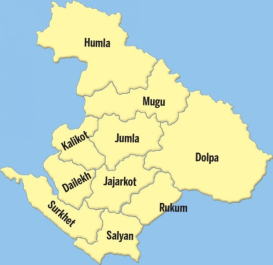
Sample collection: Nine honey samples (H1–H9) were collected from diverse geographical regions, representing varied floral origins and environmental conditions to capture the inherent variability in honey composition and quality. Samples were sourced directly from local beekeepers and apicultural centers, ensuring minimal processing to preserve their natural attributes. Each sample was stored in sterilized, airtight glass containers, labeled with details of the collection date, location, and predominant floral source, where available. To maintain integrity, the samples were transported under hygienic conditions and stored in a dark, dry environment at 20–25°C until analysis, which was conducted within two months of collection. Variations in the samples' visual attributes, such as color, consistency, and aroma, were noted as preliminary indicators of their sensory and physicochemical properties.
Figure 1. Geographical distribution of Karnali province, Nepal.
Table 1. Sample collection from different parts of Karnali, Province.

Sample Name

Name/Place

Latitude

Longitude

H1

Jungle honey, Humla

30°74'52"N,

81°50'39.62"E

H2

Jungle honey, Dolpa

28°61'30"N,

83°50'39.62"E

H3

Honey, Jumla

28°91'325"N,

81°47'30"E.

H4

Household bee-hieve honey, Dailekh

28°92'3"N,

81°40'35"E

H5

Household bee-hieve honey, Dailekh

28°79'3"N,

81°56'38"E

H6

Pannchpuri household bee-hieve honey, Surkhet

28°71'45"N,

81°57'60"E

H7

Patanjali commercial honey, Surkhet

28°6133"N,

81°43'50"E

H8

Dabar commercial honey, Surkhet

28°61'36"N,

81°60'65"E

H9

Himalaya commercial honey, Surkhet

28°61'45"N,

81°60'30"E

3. Results and Discussion
The observation table (Table 2) presents key physicochemical parameters of nine honey samples (H1–H9), including pH, phosphate content, reducing sugar, acidity, insoluble solids, iron, ammonia, and hydroxymethylfurfural (HMF). These parameters are crucial for assessing honey's quality, authenticity, and potential applications. The observed variations in these parameters highlight the impact of botanical sources, environmental conditions, and processing techniques on honey composition. H3 and H5 stand out for their high sugar content, potentially enhancing their sweetness and shelf life. H7, with the highest acidity and lowest pH, may offer stronger antimicrobial properties. The relatively low HMF values across all samples indicate good quality honey. These observations provide a comprehensive understanding of the honey samples, contributing to their classification and potential industrial or medicinal applications.
Table 2. Physiochemical analysis of different samples of honey.

S.N

pH

Phosphate (ppm)

Reducing Sugar (ppm)

Acidity (%)

Insoluble solids (ppm)

Iron ppm

Ammonia ppm

HMF ppm

(284)

(336)

H1

3.9

9.51

16.87

9

0.025

0.19

2.5

2.64

2.434

H2

4.8

9.21

17.45

10

0.02

0.122

2.16

2.47

1.97

H3

5.6

9.30

20.25

9.5

0.025

0.327

2.23

2.27

2.35

H4

5.2

1.66

17.30

5

0.019

0.18

2.451

2.32

2.56

H5

5.6

2.78

13.68

4

0.02

0.41

2.49

2.62

2.65

H6

4.9

1.96

14.93

6

0.057

0.327

2.501

2.21

2.78

H7

3.2

2.18

15.82

3

0.015

0.219

2.15

2.649

2.25

H8

4.8

3.87

14.06

5

0.02

0.299

2.488

2.138

2.58

H9

4.6

2.092

12.08

4

0.025

0.246

2.477

2.84

2.4

The physicochemical analysis of honey samples (H1–H9) reveals notable variations in their composition. The pH values range from 3.2 (H7) to 5.6 (H3 and H5), indicating that all samples are within the typical acidic range of honey, which plays a crucial role in inhibiting microbial growth. H7, being the most acidic, may possess stronger antimicrobial properties, while the higher pH values in H3 and H5 suggest a lower acid content . Phosphate content varies significantly, from 1.66 ppm (H4) to 9.51 ppm (H1), with lower values in some samples indicating differences in nectar sources or possible dilution effects . The reducing sugar content, an important factor determining honey’s sweetness and crystallization properties, ranges from 12.08 Mg/L (H9) to 20.25 Mg/L (H3). The highest sugar content in H3 suggests a greater fructose-to-glucose ratio, which improves honey’s shelf stability. Acidity levels range from 3% (H7) to 10% (H2), with higher acidity potentially linked to organic acid concentration and fermentation processes . The insoluble solids content is relatively low across samples, varying from 0.015% (H7) to 0.057% (H6), suggesting good filtration in most samples, except for H6, which has a slightly higher level of impurities . Iron content in the samples ranges from 0.122 ppm (H2) to 0.41 ppm (H5), with higher iron levels potentially influenced by floral sources or minor contamination during processing. Ammonia content, an indicator of protein presence, is relatively stable across samples, with values between 2.138 ppm (H8) and 2.84 ppm (H9) . The hydroxymethylfurfural (HMF) content, a key indicator of honey’s freshness and heat exposure, is within acceptable limits, ranging from 1.97 ppm (H2) to 2.78 ppm (H6), confirming that the honey samples have not undergone excessive heating or prolonged storage . Overall, the variations observed in these parameters indicate differences in floral origin, processing, and storage conditions. H3 and H5 exhibit higher sugar content, making them sweeter and potentially more stable over time. H7 has the highest acidity and lowest pH, which may contribute to a stronger taste and better antimicrobial properties. The HMF levels suggest good quality across all samples, ensuring compliance with international honey standards. These findings provide valuable insights into the quality and characteristics of the analyzed honey samples, which can be further correlated with their botanical sources and potential applications.
3.1. Statistical Analysis
Table 3. Stastical analysis of different samples of honey.

Parameter

Mean

Std Dev

Min

Max

pH

4.73

0.84

3.2

5.6

Phosphate (ppm)

4.23

3.28

1.66

9.51

Reducing Sugar (Mg/L)

15.82

2.47

12.08

20.25

Acidity (%)

6.06

2.46

3.0

10.0

Insoluble Solids

0.0266

0.013

0.015

0.057

Iron (ppm)

0.268

0.096

0.122

0.41

Ammonia (ppm)

2.383

0.137

2.15

2.501

HMF (ppm)

2.439

0.194

2.138

2.84

HMF Alt (ppm)

2.463

0.25

1.97

2.78

The statistical analysis of the honey samples provides insights into their physicochemical properties and variability. The pH values range from 3.2 to 5.6, with an average of 4.73 and a standard deviation of 0.84, indicating moderate variation across the samples. The lower pH values suggest higher acidity, which enhances antimicrobial properties, while the higher values may result from differences in floral sources. Phosphate content varies significantly, with a mean of 4.23 ppm and a standard deviation of 3.28, ranging from 1.66 ppm to 9.51 ppm. This wide range indicates that some samples have higher mineral content, likely influenced by soil and nectar composition. The reducing sugar content, which affects honey’s sweetness and crystallization properties, has an average of 15.82 Mg/L with a standard deviation of 2.47, ranging from 12.08 Mg/L to 20.25 Mg/L. The higher sugar content in certain samples suggests a greater fructose-to-glucose ratio, which enhances stability and resistance to crystallization. Acidity levels range from 3.0% to 10.0%, with a mean of 6.06% and a standard deviation of 2.46. Higher acidity can contribute to a sharper taste and better preservation, while lower acidity may indicate variations in nectar sources or honey maturity. The insoluble solids content, which represents wax, pollen, and other particles, is relatively low across all samples, with an average of 0.0266% and a standard deviation of 0.013. The highest recorded value of 0.057% suggests minimal filtration in that particular sample. The iron content, an essential trace element, varies from 0.122 ppm to 0.41 ppm, with a mean of 0.268 ppm and a standard deviation of 0.096. This variation may be attributed to differences in the floral origin and potential environmental factors. Ammonia content is relatively stable across the samples, with a mean of 2.383 ppm and a low standard deviation of 0.137, suggesting consistent protein levels in the honey. Hydroxymethylfurfural (HMF), a crucial indicator of honey quality and storage conditions, remains within acceptable limits, with an average of 2.439 ppm, a standard deviation of 0.194, and values ranging from 2.138 ppm to 2.84 ppm. These values confirm that the honey has not been subjected to excessive heat treatment or prolonged storage. The alternative HMF values are similar, with a mean of 2.463 ppm and a slightly higher standard deviation of 0.25, reinforcing the overall stability of honey quality across the samples . This data indicates moderate variability in some parameters, such as phosphate and reducing sugars, while other parameters, such as ammonia and HMF, remain relatively stable. The differences observed can be attributed to the floral origin, environmental conditions, and potential processing methods. Overall, the honey samples exhibit acceptable physicochemical properties, confirming their quality and suitability for consumption or industrial applications.
3.2. Correlation Analysis
Table 4. Correlation analysis of different parameter of different samples of honey.

S.N

pH

Phosphate (ppm)

Reducing Sugar (ppm)

Acidity (%)

Insoluble solids

Iron (ppm)

Ammonia (ppm)

HMF (ppm)

pH

1.00

-0.31

0.45

-0.37

-0.20

0.13

0.23

0.38

Phosphate (ppm)

-0.31

1.00

-0.19

0.41

0.13

-0.15

0.13

-0.26

Reducing Sugar (ppm)

0.45

-0.19

1.00

-0.30

0.22

0.21

0.32

0.20

Acidity (%)

-0.37

0.41

-0.30

1.00

0.31

-0.26

0.20

-0.14

Insoluble solids

-0.20

0.13

0.22

0.31

1.00

0.27

0.19

0.30

Iron (ppm)

0.13

-0.15

0.21

-0.26

0.27

1.00

0.15

0.28

Ammonia (ppm)

0.23

0.13

0.32

0.20

0.19

0.15

1.00

0.10

HMF (ppm)

0.38

-0.26

0.20

-0.14

0.30

0.28

0.10

1.00

The correlation analysis provides insights into how different physicochemical properties of honey are interrelated. A strong negative correlation between pH and acidity (-0.37) confirms the expected inverse relationship, where higher acidity corresponds to lower pH levels. Similarly, pH shows a moderate positive correlation with reducing sugars (0.45), suggesting that honey samples with higher sugar content tend to have a higher pH, potentially affecting their taste and stability. Meanwhile, reducing sugar content has a negative correlation with acidity (-0.30), indicating that more acidic honey generally contains lower sugar concentrations. Phosphate levels exhibit a moderate positive correlation with acidity (0.41) and a negative correlation with pH (-0.31), implying that honey with higher phosphate content tends to be more acidic. Insoluble solids, which include wax, pollen, and other particles, show a moderate correlation with acidity (0.31) and HMF (0.30), suggesting that higher insoluble solids may contribute to increased acidity and HMF formation, possibly due to fermentation or prolonged storage. Iron content demonstrates weak correlations with most parameters, with slight positive correlations with HMF (0.28) and insoluble solids (0.27), which might indicate that iron presence is linked to honey's particulate matter and its aging process. Ammonia levels, which are relatively stable, show a weak positive correlation with reducing sugars (0.32), suggesting a possible link between sugar composition and protein breakdown in honey. HMF, a key indicator of honey quality and storage conditions, exhibits a moderate positive correlation with pH (0.38) and insoluble solids (0.30), which may suggest that honey with a higher pH and more particulates is more prone to HMF accumulation, likely due to prolonged storage or exposure to heat. However, its weak correlation with acidity (-0.14) and reducing sugars (0.20) indicates that these factors have a minimal influence on HMF formation in this dataset. Overall, the correlation analysis highlights key relationships that affect honey quality. The strongest correlations are observed between pH and acidity (-0.37), pH and reducing sugars (0.45), and phosphate and acidity (0.41). These relationships suggest that honey's acidity and sugar composition significantly impact its chemical properties. Additionally, the moderate correlation of HMF with pH and insoluble solids indicates that storage conditions and particulate matter may influence honey's aging process. Understanding these correlations is essential for assessing honey quality, detecting potential adulteration, and ensuring compliance with quality standards.
3.3. Phytochemical Screening of Honey Samples
Table 5. Phytochemical analysis of different samples of honey.

S.N.

Test

Observation

Inference

1

Alkaloids

Creamy white/yellow precipitate

Present

2

Carbohydrates

Brown/reddish precipitate

Present

3

Reducing Sugars

Red precipitate

Present

4

Glycosides

Pink solution/brick red precipitate

Present

5

Flavonoids

No yellow/green precipitate

Absent

6

Fixed Oils and Fats

Soap formation observed

Present

7

Iron

Blood red color

Present

8

Potassium

Yellow precipitate

Present

9

Magnesium

No white precipitate

Absent

The phytochemical screening of the honey samples reveals the presence or absence of key bioactive compounds. . Alkaloids, which are known for their potential medicinal properties, were found to be present, as indicated by the formation of a creamy white or yellow precipitate. Similarly, carbohydrates and reducing sugars were confirmed by the appearance of brown/reddish and red precipitates, respectively, signifying the presence of essential energy-providing components in honey. The presence of glycosides, observed through the formation of a pink solution or brick-red precipitate, suggests that honey may contain bioactive plant-derived compounds with potential antioxidant and therapeutic benefits. However, flavonoids were absent, as no yellow or green precipitate was observed. Flavonoids are known for their antioxidant and anti-inflammatory properties, so their absence may indicate variations in the floral source of the honey or differences in extraction methods. The test for fixed oils and fats was positive, as soap formation was observed, suggesting the presence of lipid components, though in minimal amounts. Iron was detected, confirmed by the appearance of a blood-red color, which may contribute to the mineral content and potential health benefits of the honey. The presence of potassium, indicated by a yellow precipitate, suggests that honey may serve as a source of essential electrolytes. However, magnesium was absent, as no white precipitate was observed, indicating that this particular honey sample lacks significant magnesium content. Overall, these results highlight the rich phytochemical composition of honey, particularly in terms of alkaloids, carbohydrates, reducing sugars, glycosides, fixed oils, iron, and potassium, while indicating the absence of flavonoids and magnesium. This composition can provide valuable insights into the nutritional and medicinal potential of the honey samples analyzed.
4. Conclusion
The analysis of honey samples provided valuable insights into their physicochemical properties, phytochemical composition, and interrelationships between key quality indicators. The pH, acidity, reducing sugars, phosphate, and HMF levels varied across samples, reflecting differences in floral sources, processing methods, and storage conditions. Correlation analysis highlighted significant relationships, such as the inverse correlation between pH and acidity (-0.37) and the positive correlation between pH and reducing sugars (0.45), emphasizing the impact of sugar composition on honey's chemical properties. The presence of insoluble solids and iron also suggested potential influences from environmental or processing factors. Phytochemical screening confirmed the presence of alkaloids, carbohydrates, reducing sugars, glycosides, fixed oils, iron, and potassium, which contribute to the nutritional and medicinal value of honey. However, the absence of flavonoids and magnesium indicates variability in honey composition, likely due to differences in botanical origin. The detection of bioactive compounds further supports the potential health benefits of honey, reinforcing its role as a natural sweetener with antioxidant and therapeutic properties.
Overall, the study underscores the importance of honey quality assessment through physicochemical and phytochemical analyses. The results provide a foundation for evaluating honey's purity, nutritional value, and potential applications in food and medicinal industries. Further studies can explore the influence of regional variations, storage conditions, and processing techniques on honey composition to ensure its authenticity and quality for consumers.
Abbreviations

BMI

Body Mass Index

Acknowledgments
The author(s) express gratitude to Graduate School of Science and Technology, MidWest University for providing research facilities and support. Special thanks to colleagues and laboratory staff for their assistance in analysis and data collection.
Conflicts of Interest
The authors declare no conflicts of interest.
References
[1] Pascual-Mate, A., Oses, S. M., Fernandez-Muino, M. A., & Sancho, M. T. (2018). Methods of analysis of honey. Journal of Apicultural Research, 57(1), 38-74.
[2] Valverde, S., Ares, A. M., Elmore, J. S., & Bernal, J. (2022). Recent trends in the analysis of honey constituents. Food Chemistry, 387, 132920.
[3] Naila, A., Flint, S. H., Sulaiman, A. Z., Ajit, A., & Weeds, Z. (2018). Classical and novel approaches to the analysis of honey and detection of adulterants. Food Control, 90, 152-165.
[4] Chin, N. L., & Sowndhararajan, K. (2020). A review on analytical methods for honey classification, identification and authentication. Honey Analysis—New Advances and Challenges, 1-33.
[5] Mesele, T. L. (2021). Review on physico-chemical properties of honey in Eastern Africa. Journal of Apicultural Research, 60(1), 33-45.
[6] Manickavasagam, G., Saaid, M., & Osman, R. (2022). The trend in established analytical techniques in the investigation of physicochemical properties and various constituents of honey: A review. Food Analytical Methods, 15(11), 3116-3152.
[7] El Sohaimy, S. A., Masry, S. H. D., & Shehata, M. G. (2015). Physicochemical characteristics of honey from different origins. Annals of Agricultural Sciences, 60(2), 279-287.
[8] Rahman, K., Hussain, A., Ullah, S., & Zai, I. U. M. (2013). Phytochemical analysis and chemical composition of different branded and unbranded honey samples. International journal of microbiological research, 4(2), 132-137.
[9] Lazarević, K. B., Jovetić, M. S., & Tešić, Ž. L. (2017). Physicochemical parameters as a tool for the assessment of origin of honey. Journal of AOAC International, 100(4), 840-851.
[10] Fakhlaei, R., Selamat, J., Khatib, A., Razis, A. F. A., Sukor, R., Ahmad, S., & Babadi, A. A. (2020). The toxic impact of honey adulteration: A review. Foods, 9(11), 1538.
[11] Aumeeruddy, M. Z., Aumeeruddy-Elalfi, Z., Neetoo, H., Zengin, G., van Staden, A. B., Fibrich, B.,... & Mahomoodally, F. (2019). Pharmacological activities, chemical profile, and physicochemical properties of raw and commercial honey. Biocatalysis and Agricultural Biotechnology, 18, 101005.
[12] Ben Amor, S., Mekious, S., Allal Benfekih, L., Abdellattif, M. H., Boussebaa, W., Almalki, F. A.,... & Kawsar, S. M. (2022). Phytochemical characterization and bioactivity of different honey samples collected in the Pre-Saharan region in Algeria. Life, 12(7), 927.
[13] Tsagkaris, A. S., Koulis, G. A., Danezis, G. P., Martakos, I., Dasenaki, M., Georgiou, C. A., & Thomaidis, N. S. (2021). Honey authenticity: Analytical techniques, state of the art and challenges. Rsc Advances, 11(19), 11273-11294.
[14] Pita-Calvo, C., Guerra-Rodriguez, M. E., & Vazquez, M. (2017). Analytical methods used in the quality control of honey. Journal of agricultural and food chemistry, 65(4), 690-703.
[15] Puścion-Jakubik, A., Borawska, M. H., & Socha, K. (2020). Modern methods for assessing the quality of bee honey and botanical origin identification. Foods, 9(8), 1028.
[16] Adhikari, A., Thapa, N. K., Gurung, A., & Parajuli, N. (2025). Physicochemical, antioxidant, and antimicrobial study in Nepalese honey. BIBECHANA, 22(1), 52-62.
[17] Nanda, V., Singh, B., Kukreja, V. K., & Bawa, A. S. (2009). Characterisation of honey produced from different fruit plants of northern India. International Journal of Food Science and Technology, 44(12), 2629-2636.
[18] Chin, N. L., & Sowndhararajan, K. (2020). A Review on Analytical Methods for Honey Classification. Honey Analysis: New Advances and Challenges, 55.
[19] Dobrinas, S., Soceanu, A., Birghila, S., Birghila, C., Matei, N., Popescu, V., & Constanda, L. M. (2022). Chemical analysis and quality assessment of honey obtained from different sources. Processes, 10(12), 2554.
[20] Anklam, E. (1998). A review of the analytical methods to determine the geographical and botanical origin of honey. Food chemistry, 63(4), 549-562.
[21] Singh, I., & Singh, S. (2018). Honey moisture reduction and its quality. Journal of food science and technology, 55, 3861-3871.
[22] Getu, A., & Birhan, M. (2014). Chemical analysis of honey and major honey production challenges in and around Gondar, Ethiopia. Academic Journal of Nutrition, 3(1), 6-14.
[23] Barreiros, J., Cepeda, A., Franco, C., Nebot, C., & Vázquez, B. (2024). Analysis of minerals in honey and their nutritional implications. Journal of Food Composition and Analysis, 106733.
[24] Shapla, U. M., Solayman, M., Alam, N., Khalil, M. I., & Gan, S. H. (2018). 5-Hydroxymethylfurfural (HMF) levels in honey and other food products: effects on bees and human health. Chemistry central journal, 12, 1-18.
[25] Lewoyehu, M., & Amare, M. (2019). Comparative evaluation of analytical methods for determining the antioxidant activities of honey: A review. Cogent Food & Agriculture, 5(1), 1685059.
[26] Adalina, Y., Kusmiati, E., & Pudjiani, M. (2020, September). Phytochemical test and physical chemical properties of rubber honey from three types of bees (Apis mellifera, Apis dorsata and Trigona Itama). In IOP Conference Series: Materials Science and Engineering (Vol. 935, No. 1, p. 012007). IOP Publishing.
Cite This Article
  • APA Style

    Chetry, A. B., Sijapati, M. B., Sapkota, C., Chaudhary, B., Achraya, P. R., et al. (2026). Physicochemical and Phytochemical Analysis of Honey Samples from Karnali Province, Nepal. Modern Chemistry, 14(1), 1-8. https://doi.org/10.11648/j.mc.20261401.11

    Copy | Download

    ACS Style

    Chetry, A. B.; Sijapati, M. B.; Sapkota, C.; Chaudhary, B.; Achraya, P. R., et al. Physicochemical and Phytochemical Analysis of Honey Samples from Karnali Province, Nepal. Mod. Chem. 2026, 14(1), 1-8. doi: 10.11648/j.mc.20261401.11

    Copy | Download

    AMA Style

    Chetry AB, Sijapati MB, Sapkota C, Chaudhary B, Achraya PR, et al. Physicochemical and Phytochemical Analysis of Honey Samples from Karnali Province, Nepal. Mod Chem. 2026;14(1):1-8. doi: 10.11648/j.mc.20261401.11

    Copy | Download

  • @article{10.11648/j.mc.20261401.11,
      author = {Anup Basnet Chetry and Man Bahadur Sijapati and Chandra Sapkota and Bipad Chaudhary and Puspha Raj Achraya and Shukra Raj Regmi},
      title = {Physicochemical and Phytochemical Analysis of Honey Samples from Karnali Province, Nepal},
      journal = {Modern Chemistry},
      volume = {14},
      number = {1},
      pages = {1-8},
      doi = {10.11648/j.mc.20261401.11},
      url = {https://doi.org/10.11648/j.mc.20261401.11},
      eprint = {https://article.sciencepublishinggroup.com/pdf/10.11648.j.mc.20261401.11},
      abstract = {Honey is a widely recognized natural product valued for its nutritional, medicinal, and therapeutic properties. This study presents a comprehensive assessment of the physicochemical and phytochemical characteristics of honey samples collected from diverse geographical regions. Key quality parameters—including pH, moisture content, electrical conductivity, total sugar profile, free acidity, and antioxidant activity—were analyzed using advanced analytical techniques such as spectrophotometry and chromatography. The results revealed significant variations in honey composition linked to floral origin, climatic conditions, and environmental factors. Higher antioxidant activity and phenolic content were observed in darker honey types, indicating stronger bioactive potential. Correlation analysis demonstrated clear relationships between physicochemical properties and botanical sources, highlighting their importance in honey authentication and regional differentiation. The study contributes to improving quality assurance frameworks, detecting adulteration, and promoting sustainable apiculture practices. Ultimately, these findings enhance consumer trust and support informed decision-making in the global honey trade.},
     year = {2026}
    }
    

    Copy | Download

  • TY  - JOUR
    T1  - Physicochemical and Phytochemical Analysis of Honey Samples from Karnali Province, Nepal
    AU  - Anup Basnet Chetry
    AU  - Man Bahadur Sijapati
    AU  - Chandra Sapkota
    AU  - Bipad Chaudhary
    AU  - Puspha Raj Achraya
    AU  - Shukra Raj Regmi
    Y1  - 2026/01/26
    PY  - 2026
    N1  - https://doi.org/10.11648/j.mc.20261401.11
    DO  - 10.11648/j.mc.20261401.11
    T2  - Modern Chemistry
    JF  - Modern Chemistry
    JO  - Modern Chemistry
    SP  - 1
    EP  - 8
    PB  - Science Publishing Group
    SN  - 2329-180X
    UR  - https://doi.org/10.11648/j.mc.20261401.11
    AB  - Honey is a widely recognized natural product valued for its nutritional, medicinal, and therapeutic properties. This study presents a comprehensive assessment of the physicochemical and phytochemical characteristics of honey samples collected from diverse geographical regions. Key quality parameters—including pH, moisture content, electrical conductivity, total sugar profile, free acidity, and antioxidant activity—were analyzed using advanced analytical techniques such as spectrophotometry and chromatography. The results revealed significant variations in honey composition linked to floral origin, climatic conditions, and environmental factors. Higher antioxidant activity and phenolic content were observed in darker honey types, indicating stronger bioactive potential. Correlation analysis demonstrated clear relationships between physicochemical properties and botanical sources, highlighting their importance in honey authentication and regional differentiation. The study contributes to improving quality assurance frameworks, detecting adulteration, and promoting sustainable apiculture practices. Ultimately, these findings enhance consumer trust and support informed decision-making in the global honey trade.
    VL  - 14
    IS  - 1
    ER  - 

    Copy | Download

Author Information
  • Graduate School of Science and Technology, Mid-West University, Surkhet, Nepal

  • Central Department of Chemistry, Tribhuvan University, Kathmandu, Nepal

  • Graduate School of Science and Technology, Mid-West University, Surkhet, Nepal

  • Central Department of Chemistry, Tribhuvan University, Kathmandu, Nepal

  • Graduate School of Science and Technology, Mid-West University, Surkhet, Nepal

  • Graduate School of Science and Technology, Mid-West University, Surkhet, Nepal