
This study fabricated polymer composites from waste polyethylene terephthalate (PET) bottles and waste polypropylene (PP) using maleic anhydride MA to improve dispersion. The properties such as physical properties, mechanical properties and chemical properties of the polymer composites produced was identified, the physical properties shows that the density of the polymer composites was found to be 0.96g/cm3, 1.04g/cm3, 0.95g/cm3 and 1.05g/cm3 for sample Ab, Ac, Bb and Bc respectively as a result of filler dispersion, while the water absorption was found to be 5.12%,5.02%, 5.71% and 5.11% for sample Ab, Ac, Bb and Bc respectively due to the hydrophilic nature of the sugarcane bagasse particles. The mechanical properties results indicated that the inclusion of sugarcane bagasse particles produced a polymer composites with a good tensile strength of 22.93MPa, 25.47MPa, 25.07MPa, and elastic modulus of 28.80MPa, 284.96MPa, 287.04MPa, 289.96MPa and 200.79MPa for sample Ab, Ac, Bb and Bc respectively. The flexural strength of the polymer composites was found to be 37.45MPa, 39.91MPa, 41.50MPa and 49.41MPa for sample Ab, Ac, Bb and Bc respectively while the flexural modulus was found to be 760.8MPa, 804.7MPa, 847.2MPa and 956.5MPa. This was due to uniform dispersion of fine sugarcane bagasse particles and improved stress transfer at the matrix filler interfacial region promoted by maleic anhydride. The Fourier Transform Infrared Spectroscopy (FTIR) analysis affirmed chemical interactions between the polymer matrix and treated bagasse, with characteristic peaks corresponding to C=O stretching of PET and O–H groups of cellulose. The appearance of new peaks around 1730 cm-1 and the reduction in intensity of hydroxyl bands indicated esterification and enhanced compatibility through maleic anhydride coupling. The properties of the polymer composites produced is suitable for different application and also serves as plastic and agricultural waste management.
| Published in | Modern Chemistry (Volume 14, Issue 2) |
| DOI | 10.11648/j.mc.20261402.13 |
| Page(s) | 71-78 |
| Creative Commons |
This is an Open Access article, distributed under the terms of the Creative Commons Attribution 4.0 International License (http://creativecommons.org/licenses/by/4.0/), which permits unrestricted use, distribution and reproduction in any medium or format, provided the original work is properly cited. |
| Copyright |
Copyright © The Author(s), 2026. Published by Science Publishing Group |
Maleic Anhydride, Sugarcane Bagasse, Polymer Composites
S/N | Designation | PETw (w%) | PPw (w%) | Sugarcane bagasse particles (w%) | Maleic anhydride (w%) |
|---|---|---|---|---|---|
1 |
| 40 | 35 | 20 | 5 |
2 |
| 40 | 30 | 25 | 5 |
3 |
| 50 | 30 | 15 | 5 |
4 |
| 30 | 50 | 15 | 5 |
PET | Polyethylene terephthalate |
PETw | Waste Polyethylene terephthalate |
PP | Polypropylene |
PPw | Waste Polypropylene |
MPa | Mega Pascal |
MA | Maleic Anhydride |
| [1] | Bledzki, A. K., & Gassan, J. (1999). Composites reinforced with cellulose based fibres. Progress in Polymer Science, 24(2), 221–274. |
| [2] | Callister, W. D., & Rethwisch, D. G. (2020). Materials science and engineering: An introduction (10th ed.). Wiley. |
| [3] | Coates, J. (2006). Interpretation of infrared spectra, a practical approach. In R. A. Meyers (Ed.), Encyclopedia of Analytical Chemistry (pp. 10815–10837). John Wiley & Sons. |
| [4] | Faruk, O., Bledzki, A. K., Fink, H. P., & Sain, M. (2012). Biocomposites reinforced with natural fibers: 2000–2010. Progress in Polymer Science, 37(11), 1552–1596. |
| [5] | Fu, S. Y., Lauke, B., Mäder, E., Yue, C. Y., & Hu, X. (2008). Tensile properties of short-glass-fiber- and short-carbon-fiber-reinforced polypropylene composites. Composites Part A: Applied Science and Manufacturing, 39(6), 933–961. |
| [6] | George, J., Sreekala, M. S., & Thomas, S. (2001). A review on interface modification and characterization of natural fiber reinforced plastic composites. Polymer Engineering & Science, 41(9), 1471–1485. |
| [7] | Gupta, M. K., Srivastava, R. K., & Pathak, K. K. (2020). Chemical, mechanical, and thermal properties of polypropylene composites reinforced with rice husk, coir, and bagasse fibers. Journal of Thermoplastic Composite Materials, 33(10), 1397–1415. |
| [8] | Haque, M. M., Islam, M. S., Huque, M. M., & Hasan, M. (2019). Mechanical properties of polypropylene composites reinforced with chemically treated coir and abaca fiber. Industrial Crops and Products, 141, 111773. |
| [9] | Joseph, K., Thomas, S., & Pavithran, C. (2002). Effect of chemical treatment on the tensile properties of short sisal fiber-reinforced polyethylene composites. Composites Science and Technology, 59(11), 1625–1640. |
| [10] | Kabir, M. M., Wang, H., Lau, K. T., & Cardona, F. (2012). Chemical treatments on plant-based natural fibre reinforced polymer composites: An overview. Composites Part B: Engineering, 43(7), 2883–2892. |
| [11] | Ku, H., Wang, H., Pattarachaiyakoop, N., & Trada, M. (2011). A review on the tensile properties of natural fiber reinforced polymer composites. Composites Part B: Engineering, 42(4), 856–873. |
| [12] | Kumar, R., Raj, R. G., & Sinha, S. (2018). Effect of maleic anhydride on the mechanical and thermal properties of polypropylene composites reinforced with natural fibers. Journal of Applied Polymer Science, 135(1), 45672. |
| [13] | Mishra, P., Singh, A., & Gupta, R. (2015). Influence of maleic anhydride compatibilization on mechanical and morphological behavior of hybrid natural fiber composites. Journal of Applied Polymer Science, 139(12), e51673. |
| [14] | Pickering, K. L., Efendy, M. G. A., & Le, T. M. (2016). A review of recent developments in natural fibre composites and their mechanical performance. Composites Part A: Applied Science and Manufacturing, 83, 98–112. |
| [15] | Sreekala, M. S., Kumaran, M. G., & Thomas, S. (2002). Water sorption in oil palm fiber reinforced phenol formaldehyde composites. Composites Part A: Applied Science and Manufacturing, 33(6), 763–777. |
| [16] | Stuart, B. (2021). Infrared Spectroscopy: Fundamentals and Applications (2nd ed.). John Wiley & Sons. |
| [17] | Thomason, J. L. (2009). The influence of fibre length, diameter and concentration on the modulus of glass fibre reinforced polypropylene. Composites Part A: Applied Science and Manufacturing, 40(8), 1141–1151. |
| [18] | Yang, H., Yan, R., Chen, H., Lee, D. H., & Zheng, C. (2012). Characteristics of hemicellulose, cellulose and lignin pyrolysis. Fuel, 86(12-13), 1781–1788. |
| [19] | Zhang, X., Deng, Y., & Wang, L. (2014). Modification of natural fiber-reinforced composites with maleic anhydride and silane coupling agents. Polymer Composites, 35(2), 271–279. |
APA Style
Abdulrazak, A., Abdullahi, D., Musa, B. M., Haniff, W. M., Jaji, A. A. (2026). Fabrication of Polymer Composites Materials Using Waste PP and Waste PET Bottles Filled with Sugarcane Bagasse Particles. Modern Chemistry, 14(2), 71-78. https://doi.org/10.11648/j.mc.20261402.13
ACS Style
Abdulrazak, A.; Abdullahi, D.; Musa, B. M.; Haniff, W. M.; Jaji, A. A. Fabrication of Polymer Composites Materials Using Waste PP and Waste PET Bottles Filled with Sugarcane Bagasse Particles. Mod. Chem. 2026, 14(2), 71-78. doi: 10.11648/j.mc.20261402.13
@article{10.11648/j.mc.20261402.13,
  author = {Akilu Abdulrazak and Danladi Abdullahi and Bukhari Muhammad Musa and Wahid Muhd Haniff and Aliyu Auwal Jaji},
  title = {Fabrication of Polymer Composites Materials Using Waste PP and Waste PET Bottles Filled with Sugarcane Bagasse Particles},
  journal = {Modern Chemistry},
  volume = {14},
  number = {2},
  pages = {71-78},
  doi = {10.11648/j.mc.20261402.13},
  url = {https://doi.org/10.11648/j.mc.20261402.13},
  eprint = {https://article.sciencepublishinggroup.com/pdf/10.11648.j.mc.20261402.13},
  abstract = {This study fabricated polymer composites from waste polyethylene terephthalate (PET) bottles and waste polypropylene (PP) using maleic anhydride MA to improve dispersion. The properties such as physical properties, mechanical properties and chemical properties of the polymer composites produced was identified, the physical properties shows that the density of the polymer composites was found to be 0.96g/cm3, 1.04g/cm3, 0.95g/cm3 and 1.05g/cm3 for sample Ab, Ac, Bb and Bc respectively as a result of filler dispersion, while the water absorption was found to be 5.12%,5.02%, 5.71% and 5.11% for sample Ab, Ac, Bb and Bc respectively due to the hydrophilic nature of the sugarcane bagasse particles. The mechanical properties results indicated that the inclusion of sugarcane bagasse particles produced a polymer composites with a good tensile strength of 22.93MPa, 25.47MPa, 25.07MPa, and elastic modulus of 28.80MPa, 284.96MPa, 287.04MPa, 289.96MPa and 200.79MPa for sample Ab, Ac, Bb and Bc respectively. The flexural strength of the polymer composites was found to be 37.45MPa, 39.91MPa, 41.50MPa and 49.41MPa for sample Ab, Ac, Bb and Bc respectively while the flexural modulus was found to be 760.8MPa, 804.7MPa, 847.2MPa and 956.5MPa. This was due to uniform dispersion of fine sugarcane bagasse particles and improved stress transfer at the matrix filler interfacial region promoted by maleic anhydride. The Fourier Transform Infrared Spectroscopy (FTIR) analysis affirmed chemical interactions between the polymer matrix and treated bagasse, with characteristic peaks corresponding to C=O stretching of PET and O–H groups of cellulose. The appearance of new peaks around 1730 cm-1 and the reduction in intensity of hydroxyl bands indicated esterification and enhanced compatibility through maleic anhydride coupling. The properties of the polymer composites produced is suitable for different application and also serves as plastic and agricultural waste management.},
 year = {2026}
}
TY  - JOUR
T1  - Fabrication of Polymer Composites Materials Using Waste PP and Waste PET Bottles Filled with Sugarcane Bagasse Particles
AU  - Akilu Abdulrazak
AU  - Danladi Abdullahi
AU  - Bukhari Muhammad Musa
AU  - Wahid Muhd Haniff
AU  - Aliyu Auwal Jaji
Y1  - 2026/06/15
PY  - 2026
N1  - https://doi.org/10.11648/j.mc.20261402.13
DO  - 10.11648/j.mc.20261402.13
T2  - Modern Chemistry
JF  - Modern Chemistry
JO  - Modern Chemistry
SP  - 71
EP  - 78
PB  - Science Publishing Group
SN  - 2329-180X
UR  - https://doi.org/10.11648/j.mc.20261402.13
AB  - This study fabricated polymer composites from waste polyethylene terephthalate (PET) bottles and waste polypropylene (PP) using maleic anhydride MA to improve dispersion. The properties such as physical properties, mechanical properties and chemical properties of the polymer composites produced was identified, the physical properties shows that the density of the polymer composites was found to be 0.96g/cm3, 1.04g/cm3, 0.95g/cm3 and 1.05g/cm3 for sample Ab, Ac, Bb and Bc respectively as a result of filler dispersion, while the water absorption was found to be 5.12%,5.02%, 5.71% and 5.11% for sample Ab, Ac, Bb and Bc respectively due to the hydrophilic nature of the sugarcane bagasse particles. The mechanical properties results indicated that the inclusion of sugarcane bagasse particles produced a polymer composites with a good tensile strength of 22.93MPa, 25.47MPa, 25.07MPa, and elastic modulus of 28.80MPa, 284.96MPa, 287.04MPa, 289.96MPa and 200.79MPa for sample Ab, Ac, Bb and Bc respectively. The flexural strength of the polymer composites was found to be 37.45MPa, 39.91MPa, 41.50MPa and 49.41MPa for sample Ab, Ac, Bb and Bc respectively while the flexural modulus was found to be 760.8MPa, 804.7MPa, 847.2MPa and 956.5MPa. This was due to uniform dispersion of fine sugarcane bagasse particles and improved stress transfer at the matrix filler interfacial region promoted by maleic anhydride. The Fourier Transform Infrared Spectroscopy (FTIR) analysis affirmed chemical interactions between the polymer matrix and treated bagasse, with characteristic peaks corresponding to C=O stretching of PET and O–H groups of cellulose. The appearance of new peaks around 1730 cm-1 and the reduction in intensity of hydroxyl bands indicated esterification and enhanced compatibility through maleic anhydride coupling. The properties of the polymer composites produced is suitable for different application and also serves as plastic and agricultural waste management.
VL  - 14
IS  - 2
ER  -
Department of Pure and Applied Chemistry, Kaduna State University, Kaduna, Nigeria
Department of Polymer and Textile Engineering, Ahmadu Bello University, Zaria, Nigeria
Department of Polymer and Textile Engineering, Ahmadu Bello University, Zaria, Nigeria
Department of Chemistry, Universiti Putra, Selangor, Malaysia
Department of Armament Engineering, Air Force Institute of Technology, Kaduna, Nigeria
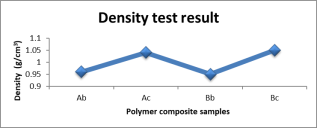
Figure 1. Density of the polymer composites.
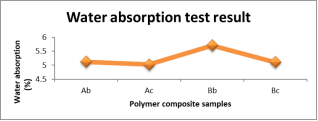
Figure 2. Water absorption of polymer composites.
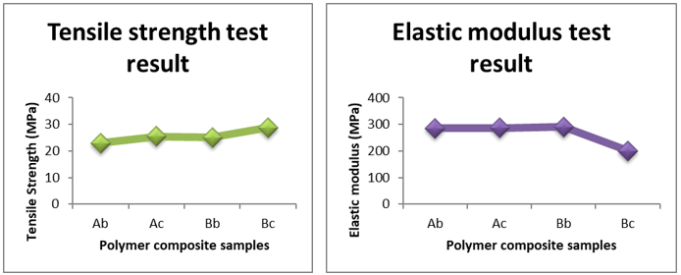
Figure 3. Tensile strength and elastic modulus of the polymer composites.
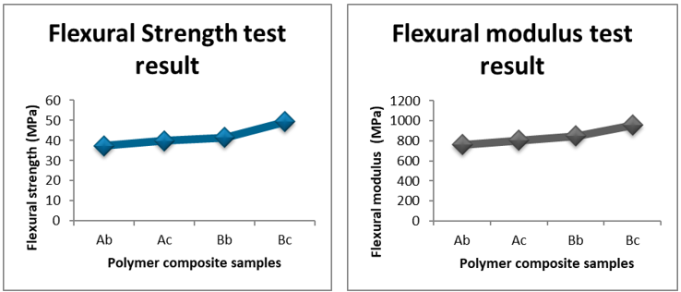
Figure 4. Flexural strength and flexural modulus of the polymer composites.
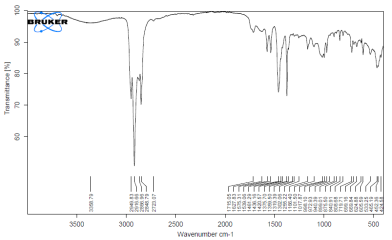
Figure 5. FTIR spectrum of sample Ab.
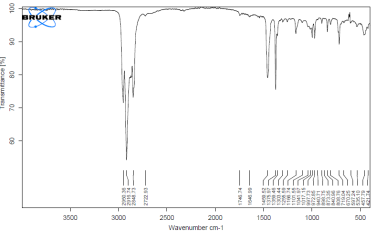
Figure 6. FTIR spectrum of sample Ac.
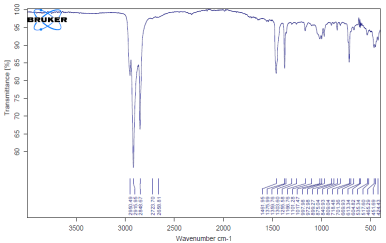
Figure 7. FTIR spectrum of sample Bb.
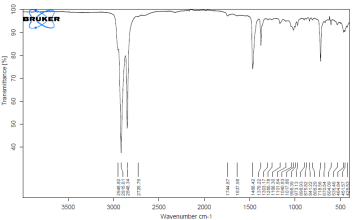
Figure 8. FTIR spectrum of sample Bc.

Information



 Share This Article
 Twitter
 Linked In
 Facebook
 Copy
Copy Download